

ISO 16128-Natural Cosmetics: Why More and More Brands Are Moving Away from Traditional Natural Certifications At a Glance For a long time, demand for natural cosmetics has been a key growth driver in the cosmetics market. However, a significant shift is currently underway: More and more brands are moving away from traditional certifications such as NATRUE or COSMOS and are…
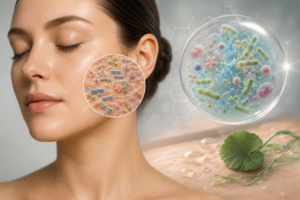
Brief Definition The skin microbiome refers to the totality of all microorganisms on the skin, including their functional potential—that is, their genetic information and metabolic activities. It is an integral part of the skin’s surface and interacts closely with pH, lipids, moisture, and the skin’s barrier function. This topic is relevant in cosmetics because formulations can influence this balance. Claims…
Face sunscreen without a white cast – this request is the most frequently asked topic in the SPF category on YouTube, TikTok, and in beauty communities. For millions of consumers, the white cast is the main reason for avoiding sunscreen. Yet the problem has long been solved – with modern formulation approaches that Cosmacon and Tojo Cosmetics consistently implement….
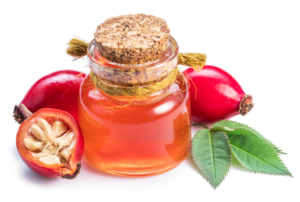
Rosehip Oil in Cosmetics: Properties, Fatty Acid Profile, and Efficacy At a Glance Rosehip oil (INCI: Rosa Canina Seed Oil or Rosa Rubiginosa Seed Oil) is extracted from the seeds of various wild rose species. In cosmetic formulations, it is primarily used for its high content of essential fatty acids and natural antioxidants. The oil supports the skin barrier, improves…
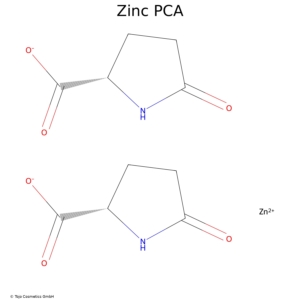
Zinc PCA in Cosmetics: Effects, Formulation, and Regulatory Requirements Short Answer/Definition: Zinc PCA (INCI: Zinc PCA) is the zinc salt of pyrrolidone carboxylic acid (PCA), a natural component of the skin’s “Natural Moisturizing Factor” (NMF). The active ingredient combines the sebum-regulating properties of zinc with the moisture-binding properties of PCA. In cosmetic formulations, zinc PCA is primarily used in products…

The cosmetics market is changing rapidly. Today’s customers are no longer just looking for effective results—they expect an experience. This is exactly where our concept comes in: colorful, visually striking skincare products that grab attention at first glance while conveying a modern skincare experience. Color plays a crucial role in this. It evokes emotions, conveys a product’s identity, and makes…
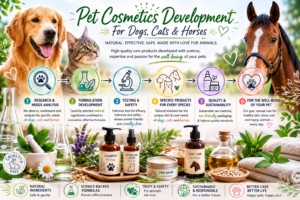
When people first encounter pet care product development, they often assume: “It’s just cosmetics — but for animals.” This assumption is understandable, but fundamentally wrong. Pet care products operate under different legal frameworks, require deep biological knowledge of animal skin, coat and microbiome — and in the worst case, an ill-conceived formula can cause discomfort or irritation to the…

Hair sun protection – a topic that is still greatly underestimated compared to facial and body care. Yet UV radiation is one of the main causes of brittle, dull, and structurally damaged hair. Those who consistently use sun protection for hair not only protect the hair structure but also the scalp from UV-related damage. Why sun protection for hair…
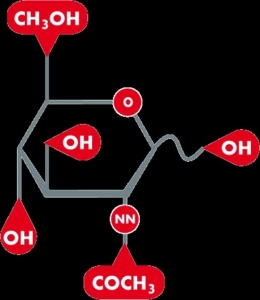
Acetylglucosamine in Cosmetics – Properties, Effects, and Formulations At a Glance N-Acetylglucosamine (INCI: Acetyl Glucosamine) is an amino sugar that serves as a building block for important biological structures such as hyaluronic acid and glycosaminoglycans. In cosmetic formulations, it is used to support skin hydration, barrier function, and skin structure. The active ingredient is water-soluble, well-tolerated by the skin, and…

Sulfur in Cosmetics: Properties, Effects, and Formulations Short Answer/Definition: Sulfur is an elemental active ingredient primarily used in cosmetic products for oily, blemished, or acne-prone skin. In cosmetic formulations, it is usually used as colloidal sulfur or sulfur. The active ingredient possesses keratolytic, antimicrobial, and sebum-regulating properties. Typical concentrations in cosmetic products range from 1% to 10%, depending on the…