
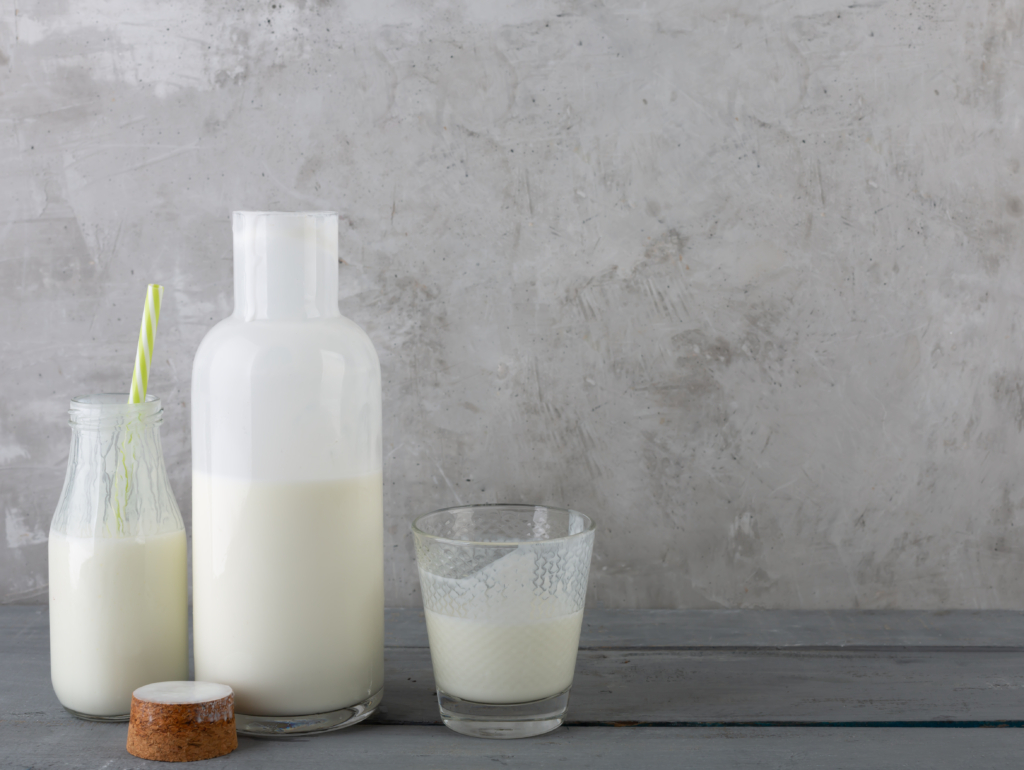
Lactic Acid in Cosmetics: Effects, Research, and Potential as a Lactic Acid Peel
Lactic acid is one of the most well-established alpha hydroxy acids (AHAs) in dermocosmetics. Whether as a gentle lactic acid peel, a moisture booster, or a pH regulator—this active ingredient combines exfoliating, hydrating, and microbiological properties in a single substance.
What is lactic acid?
INCI: Lactic Acid
Chemical name: 2-Hydroxypropionic acid
Molecular formula: C₃H₆O₃
Molar mass: 90.08 g/mol
CAS (L(+)-form): 79-33-4
pKa: approx. 3.86
Appearance: Colorless to yellowish, syrupy liquid
Solubility: Completely water-soluble
Lactic acid is a chiral compound and exists in two isomers: L(+)-lactic acid and D(-)-lactic acid. In cosmetics, the physiologically relevant L(+)-form is predominantly used.
Natural occurrence in the body
Lactic acid is not a foreign substance to the skin. It occurs naturally:
- Component of the Natural Moisturizing Factor (NMF)
- Metabolite of anaerobic glycolysis
- Regulates the skin’s physiological pH
- Involved in barrier homeostasis
It is thus a physiological component of skin function.
Mechanism of action in the skin
As a lactic acid peel, it acts through several mechanisms:
1. Keratolytic effect
Dissolves corneodesmosomes → accelerated shedding of dead cells.
2. pH regulation
Stabilizes the skin’s acid mantle.
3. Increased hydration
Increases skin hydration through hygroscopic properties.
4. Stimulation of cell renewal
Improvement of skin texture and appearance.
A professionally formulated lactic acid peel combines exfoliation with simultaneous hydration—an advantage over more aggressive acids.
Research on topical lactic acid
Smith et al., 1996
Long-term use of 5–12% lactic acid significantly improved skin structure and epidermal thickness.
Ditre et al., 1996 (Arch Dermatol)
AHA application led to increased dermal density and improved skin firmness.
Green et al., 2009
Lactic acid increases ceramide production and supports the skin barrier function.
Van Scott & Yu
Early clinical studies on AHA therapy showed improvement in xerosis and photoaging.
These data demonstrate that a properly formulated lactic acid peel not only exfoliates but can also sustainably improve skin texture.
Benefits in cosmetic products
✔ Gentle chemical exfoliation
✔ Improvement in skin appearance
✔ Support of the skin barrier function
✔ Increase in skin hydration
✔ Promotion of collagen synthesis
✔ Balancing of hyperpigmentation
✔ Suitable for anti-aging concepts
A modern lactic acid peel is suitable for:
- Facial toners
- Leave-on serums
- Intensive masks
- Professional in-salon treatments
- Scalp care
Industrial production
Lactic acid is now predominantly produced biotechnologically:
1. Fermentation
- Sugar (e.g., glucose, molasses, starch hydrolysates)
- Lactic acid bacteria (Lactobacillus spp.)
- Production of high optical purity (L(+)-form)
2. Chemical synthesis (historical)
- Acetaldehyde-based processes (less relevant today)
Biotechnological fermentation enables:
- Sustainable production
- High purity
- Vegan origin
- Scalability
L(+)-lactic acid as a biocide
𝐿(+)-lactic acid (CAS No. 79-33-4) is also approved as a biocide.
Even at a concentration as low as 2%, it exhibits significant antimicrobial activity against:
- Bacteria
- Yeasts
- Fungi
- Viruses
Studies demonstrate that lactic acid is also effective against enveloped viruses, including SARS-CoV-2 (COVID-19 virus).
This effect is based on pH reduction and protein denaturation.
Important: Biocide approval is subject to regulatory requirements and must be clearly distinguished from cosmetic use.
Formulation aspects
- Typical usage concentration: 2–10% (cosmetics)
- pH-optimized between 3–4 for effective lactic acid peeling
- Can be combined with hyaluronic acid, panthenol, niacinamide
- Stable in aqueous systems
- Concentration-dependent effect
A high-quality lactic acid peel requires precise pH control and buffer systems.
New products with lactic acid for your brand
For a quick market entry, Tojo Cosmetics offers immediately available, EU-compliant white-label products in which this active ingredient is already formulated.
For custom production orders, Cosactive offers formulation-tested active ingredient blends starting at low usage levels.
At our partner company Cosmacon, we are happy to assist you with custom product development using this innovative active ingredient.
Just inquire now!
References:
- Smith WP.Epidermal and dermal effects of topical lactic acidJ Am Acad Dermatol. 1996; 35(3 Pt 1):388–391.
- Ditre CM, Griffin TD, Murphy GF, Sueki H, Telegan B, Johnson WC, et al.Effects of alpha hydroxy acids on photoaged skin: a pilot clinical, histologic, and ultrastructural studyArch Dermatol. 1996;132(6):631–636.
- Green BA, Yu RJ, Van Scott EJ.Clinical and cosmeceutical uses of hydroxy acidsClin Dermatol. 2009;27(5):495–501.