
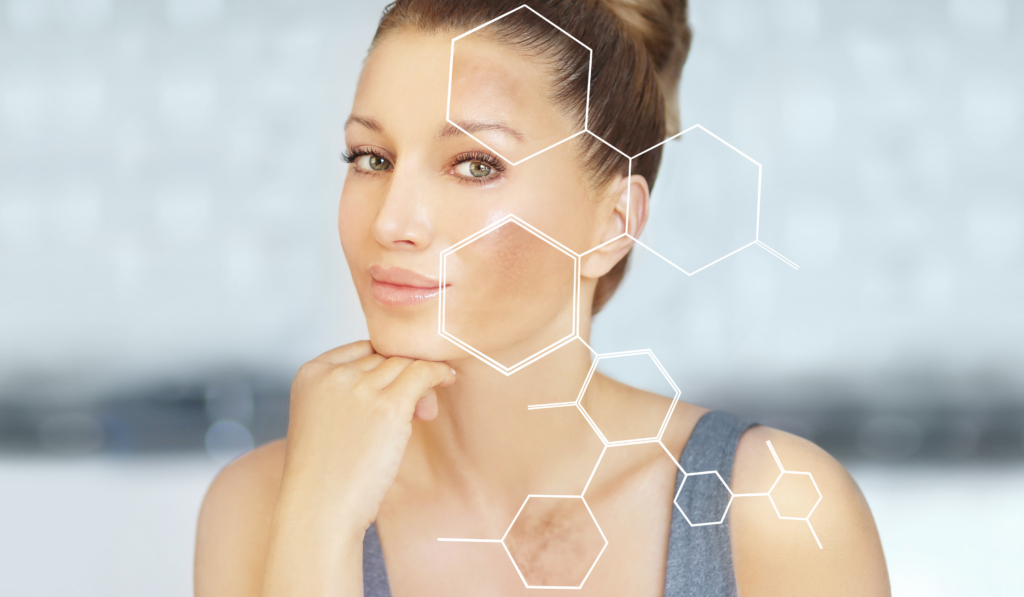
BHA – Why This Active Ingredient Has Become Indispensable in Modern Skincare
BHA is one of the most popular active ingredients in modern skincare today. Especially for oily, blemished, and acne-prone skin, BHA is considered the gold standard among chemical peels. Unlike many other exfoliating active ingredients, BHA doesn’t just act on the skin’s surface; thanks to its fat-soluble properties, it can penetrate deep into the pores. This effectively loosens excess sebum, dead skin cells, and keratin buildup.
In this article, “BHA” refers exclusively to beta hydroxy acid—that is, the beta hydroxy acid used in cosmetic peels. It is one of the most scientifically well-studied active ingredients for improving blemish-prone skin and refining the skin’s texture. Today, BHA is used in numerous serums, toners, ampoules, sheet masks, and peels, and has become one of the standard active ingredients in modern skincare.
Natural Occurrence and Production of BHA
The most important member of the BHA group is salicylic acid. It occurs naturally as a component of various plants and is found, among other places, in the leaves, flowers, and roots of certain plant species. Historically, it was extracted from the bark of various willow trees, which is where its name comes from. It can also be isolated from the spirea shrub, which is why it was formerly known as spiraic acid. Today, BHA is primarily produced synthetically to ensure consistently high purity and quality for cosmetic applications.
Chemically, BHA belongs to the hydroxycarboxylic acids. Due to its unique molecular structure, this active ingredient possesses both fat-soluble and keratolytic properties. It is precisely this combination that makes BHA an exceptionally effective ingredient for treating blemish-prone skin.
How does BHA affect the skin?
What sets BHA apart is its lipophilicity. While water-soluble fruit acids primarily act on the skin’s surface, BHA can penetrate deep into sebum-rich pores. There, the active ingredient dissolves excess sebum, dead skin cells, and keratinized tissue, which are often responsible for blackheads and pimples.
The most important properties of BHA include:
- gentle exfoliation of dead skin cells
- refinement of the skin’s texture
- cleansing of clogged pores
- reduction of blackheads
- reduction of skin blemishes
- support for natural skin renewal
- alleviation of pigmentation spots caused by blemishes
- improvement of oily skin
- promotion of an even skin tone
Unlike mechanical exfoliants, BHA works particularly evenly and without abrasive particles. This makes the active ingredient ideal for regular use.
Scientifically Proven Efficacy
The efficacy of BHA has been investigated in numerous dermatological studies. Very good results have been observed, particularly for blemished skin and mild to moderate acne.
Clinical studies demonstrate, among other things:
- Reduction of blackheads
- Reduction of inflammatory skin blemishes
- Shrinking of visibly enlarged pores
- Improvement in skin appearance
- More even skin texture
- Reduction of post-inflammatory hyperpigmentation
For cosmetic products, concentrations up to 2% BHA are considered standard. At this dosage, the active ingredient has an excellent exfoliating effect and is used in numerous serums, toners, and exfoliants. At concentrations of about 5% or higher, BHA exhibits a significantly stronger keratolytic and comedolytic effect, as is used, for example, in acne treatments. Concentrations of about 10% or higher, on the other hand, are primarily used to treat corns or warts and are not intended for use in conventional cosmetic products.
Benefits of BHA
Hardly any other cosmetic active ingredient is as well-suited for blemish-prone and oily skin as BHA. Among its most important benefits are:
- deeply cleanses pores
- removes dead skin cells
- reduces blackheads
- refines the skin’s texture
- improves skin renewal
- supports the care of blemish-prone skin
- makes the skin feel smoother
- also excellent for oily skin
- can reduce pigmentation spots caused by pimples
- well-researched scientifically
Thanks to its fat-soluble properties, BHA reaches areas of the skin that many other exfoliants cannot reach. That is why this active ingredient is considered a standard component of modern acne and detox skincare.
Disadvantages of BHA
Despite its many benefits, BHA should be used with caution.
Possible disadvantages include:
- May irritate sensitive skin
- Mild burning sensation may occur initially
- Skin may feel dry with frequent use
- Increased skin sensitivity to light
- Daily sunscreen use is recommended
- Do not apply to broken skin
- Avoid contact with eyes and mucous membranes
People with very sensitive skin should increase usage gradually and start with low-concentration products. The provided scientific article also notes that BHA should be used with caution on hypersensitive skin.
Physicochemical Properties
- INCI: Salicylic Acid
- CAS Number: 69-72-7
- Molecular formula: C₇H₆O₃
- Appearance: Colorless to white crystals
- Solubility: Slightly soluble in water, highly soluble in alcohol
- Melting point: Approx. 159 °C
- Boiling point: Approx. 211 °C
- Cosmetic function: Keratolytic, exfoliating, skin-clarifying
- Alternative names: Beta Hydroxy Acid (BHA), 2-hydroxybenzoic acid, spiroic acid
Applications of BHA in cosmetics
Thanks to its pore-cleansing properties, BHA is suitable for numerous cosmetic applications. The active ingredient is particularly popular in:
- Facial serums
- Exfoliants
- Toners
- Ampoules
- Sheet masks
- Detox products
- Skincare for blemish-prone skin
- Acne care
- Facial gels
- Spot treatments
BHA is also ideal when combined with niacinamide, panthenol, zinc PCA, or hyaluronic acid. While BHA clears the pores, these active ingredients support the skin barrier and provide additional hydration.
Product Ideas for Your Cosmetics Brand
The demand for effective products to treat blemish-prone skin has been growing steadily for years. BHA offers brands the opportunity to develop modern skincare products for both young skin and adult problem skin.
The following are already available as private-label products from Tojo Cosmetics:
- BHA Ampoule
- BHA Gel Sheet Mask
- BHA Detox Oil (green)
These products enable rapid market entry and can be sold under your own brand.
Conclusion
BHA is now one of the most important active ingredients for the care of blemish-prone and oily skin. Thanks to its ability to penetrate deep into the pores and dissolve excess sebum and dead skin cells there, BHA improves the skin’s appearance in the long term and ensures a visibly clearer complexion. At the same time, the active ingredient stands out for its scientifically proven efficacy and its versatile applications in modern cosmetic formulations. Whether as a serum, ampoule, gel, or sheet mask—BHA has become an indispensable component of high-quality facial care products and offers cosmetic brands excellent opportunities to launch innovative products with proven efficacy.
New Products with BHA for Your Brand
For rapid market entry, Tojo Cosmetics offers immediately available, EU-compliant white-label products that already contain this active ingredient.
For custom production orders, Cosactive offers formulation-tested active ingredient blends starting at low usage levels.
Through our partner company Cosmacon, we are happy to assist you with custom product development using this innovative active ingredient.
Just send us an inquiry today!
References:
Dall’Oglio F, Fabbrocini G, Tedeschi A, Donnarumma M, Chiodini P, Micali G.Clin Cosmet Investig Dermatol. 2019 Dec 31;12:961-967.
Labib R, Bury D, Boisleve F, Eichenbaum G, Girard S, Naciff J, Leal M, Wong J.Regul Toxicol Pharmacol. 2018 Apr;94:245-251
A review of the safety of cosmetic procedures during pregnancy and lactation.
Trivedi MK, Kroumpouzos G, Murase JE.Int J Womens Dermatol. 2017 Feb 27;3(1):6-10