
Caffeine in Cosmetics: The Underrated Microcirculation Booster
Caffeine is much more than just a stimulant in coffee. In cosmetics, it has long been regarded as a powerful microcirculation booster capable of specifically stimulating the skin and scalp. Its versatile effects—from promoting blood circulation to supporting hair growth—make it one of the most functionally interesting active ingredients in the field of dermocosmetics.
What is caffeine?
INCI: Caffeine
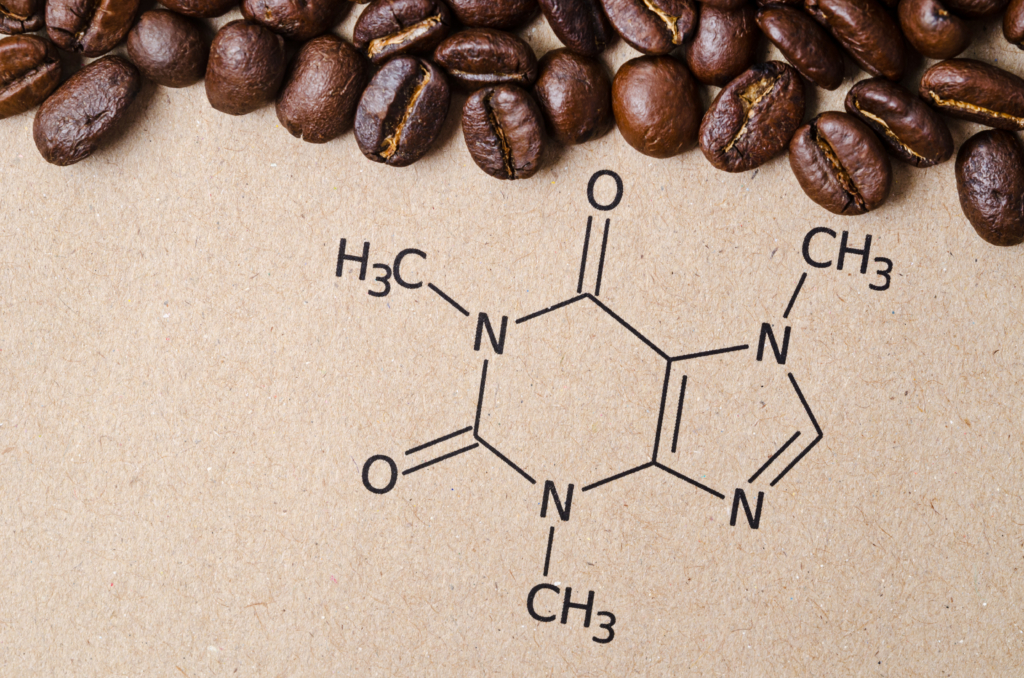
Chemical name: 1,3,7-trimethylxanthine
Molecular formula: C8H10N4O2
Molar mass: 194.19 g/mol
CAS number: 58-08-2
Appearance: white, odorless, bitter-tasting crystalline powder
Solubility: moderately soluble in water (~20 g/L at 25 °C), more soluble in warm water, highly soluble in chloroform
Its comparatively low molecular weight allows for good penetration into the skin and hair follicles—an important prerequisite for its effect as a microcirculation booster.
Natural sources of caffeine
Caffeine occurs naturally in over 60 plant species, including:
- Coffea arabica (coffee plant)
- Camellia sinensis (tea bush)
- Ilex paraguariensis (mate)
- Paullinia cupana (guarana)
- Cola acuminata (kola nut)
- Theobroma cacao (cocoa, in smaller quantities)
Plants synthesize caffeine as a natural defense against herbivores.
Industrial production of caffeine
Today, industrial extraction is primarily carried out through extraction from plant material, decaffeination of coffee or tea, purification and crystallization, or through synthetic production, which is often performed industrially via the so-called Traube synthesis or chemical conversion of urea derivatives.
For cosmetic applications, highly pure pharmaceutical-grade caffeine is used.
Mechanism of action as a caffeine microcirculation booster
Caffeine acts on the skin at multiple levels, for example by improving microcirculation.
- As a caffeine microcirculation booster, it stimulates blood flow to the skin. This can contribute to a more vibrant complexion.
- Phosphodiesterase inhibition: Increases intracellular cAMP → activation of lipolytic processes (relevant for cellulite products).
- Decongestant effect: Particularly relevant in eye care products – reduction of edema through vasoconstriction.
- Hair follicle stimulation: Promotion of metabolic activity in hair roots.
Research on caffeine in cosmetics
- Hair growth: Fischer et al., Friedrich Schiller University Jena (2007): Caffeine stimulates the growth of human hair follicles in vitro and can partially compensate for testosterone-induced growth inhibition.
- Penetration: Otberg et al. (2008): Topical caffeine can penetrate the skin significantly via the hair follicles.
- Cellulite/Lipolysis: Studies show that caffeine can stimulate lipolytic processes in adipocytes, which forms the basis for anti-cellulite products.
- Photoprotection: Lu et al. (2011) show that topically applied caffeine demonstrated protective effects against UV-induced skin damage in animal models.
These data support its positioning as a functional caffeine microcirculation booster with multiple cosmetic applications.
Benefits in cosmetic products
- Promotes skin circulation
- Supports hair growth formulations
- Reduces swelling
- Lipolytic effect on cellulite
- Antioxidant properties
- Good tolerability
- Versatile in combinations
Typical applications of caffeine
As a caffeine microcirculation booster, the active ingredient is used in:
- Eye creams
- Hair serums and shampoos
- Anti-cellulite creams
- Firming products
- Scalp tonics
- After-sun products
Sensory profile and formulation
Caffeine is stable, colorless, and odorless, and is well-compatible with:
- Niacinamide
- Peptides
- Panthenol
- Amino acids
- Menthol
- Plant extracts
The typical usage concentration ranges between 0.1% and 3%, depending on the product concept.
Conclusion
Caffeine is a highly functional active ingredient with scientifically proven effects on microcirculation, hair follicle activity, and tissue dynamics.
As a modern caffeine microcirculation booster, it is suitable for sophisticated dermocosmetic concepts with clear active ingredient communication.
New products with caffeine for your brand
For a quick market entry, Tojo Cosmetics offers immediately available, EU-compliant white-label products in which this active ingredient is already formulated.
For custom production orders, Cosactive offers formulation-tested active ingredient blends starting at low usage levels.
At our partner company Cosmacon, we are happy to assist you with custom product development using this innovative active ingredient.
Just inquire now!
References:
- Fischer TW, Hipler UC, Elsner P.Effect of caffeine and testosterone on the proliferation of human hair follicles in vitroInt J Dermatol. 2007;46(1):27–35.
- Otberg N, Patzelt A, Rasulev U, Hagemeister T, Linscheid M, Sinkgraven R, et al.The role of hair follicles in the percutaneous absorption of caffeineBr J Clin Pharmacol. 2008;65(4):488–492.
- Herman A, Herman AP.Caffeine’s mechanisms of action and its cosmetic useSkin Pharmacol Physiol.2013;26(1):8–14.
- Lu YP, Lou YR, Xie JG, Peng QY, Liao J, Yang CS, et al.Caffeine and its analogs inhibit UVB-induced skin carcinogenesis by enhancing apoptosisProc Natl Acad Sci U S A. 2007;104(31):12936–12941.